Alexa is Amazon's cloud-based virtual assistant that uses voice recognition to perform tasks, control smart devices, and provide information through devices like Echo speakers.
Context
Amazon planned to launch a subscription-based version of Alexa, called 'Alexa Plus,' for its existing customers. This upgraded Alexa included new personalization features to encourage both existing and new Alexa customers to subscribe and remain in the Alexa ecosystem. I was hired as a temporary UX design contractor to assist the Alexa Discovery & Onboarding team for 6 months. However, due to time constraints and limited developer resources, we couldn't launch a fully revised onboarding experience. As a post-launch follow-up, I was tasked with proposing a frictionless, purposeful onboarding experience for first-time Alexa Plus customers.
My role: The team included two Product Managers and me. We collaborated on user interviews, while I led the research, user flows, wireframes, and prototyping end-to-end.
-
DefineResearch
Investigated the issue with internal stakeholders; competitor analysis
-
After research
DevelopFeedbackUser flow diagrams, wireframes and a hi-fi prototype
-
After feedback
DiscoverRefine6 user interviews with Amazon users
-
After refining
DeliverPrototype
Micro-interactions
Spec
Documentation
Handoff
Problem
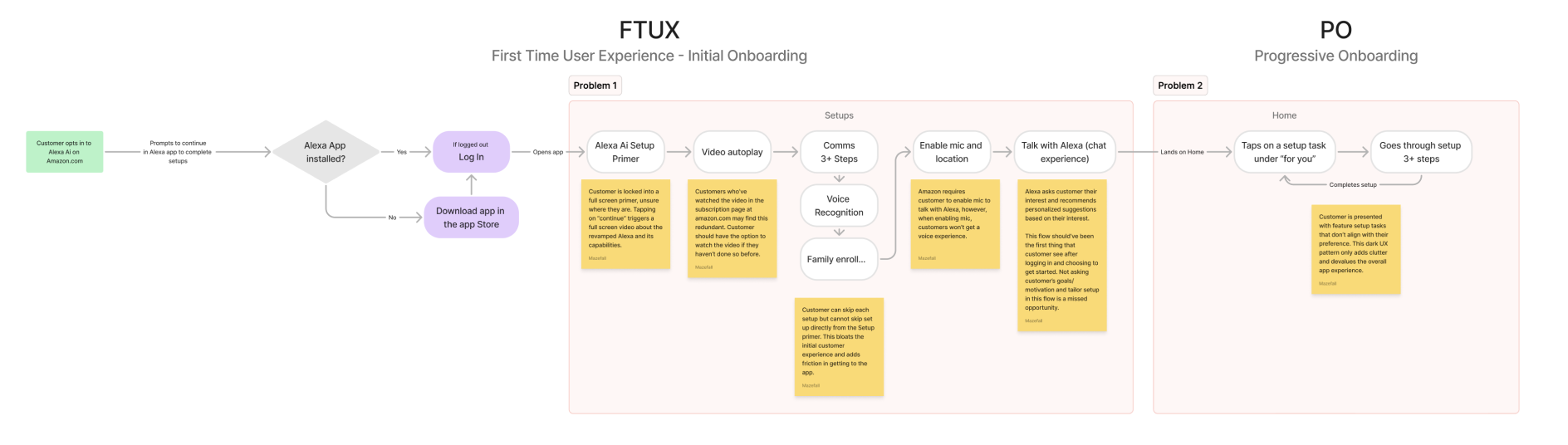
Customers who subscribed to Alexa Plus were overwhelmed by a long and unintuitive onboarding process, requiring them to set up features that did not align with their goals (i.e., their motivation). Without understanding customer motivations—such as why they subscribed to Alexa Plus—the onboarding experience felt unfulfilling and unintentional. It was like shooting a dart blindly in the dark, hoping it hits the target.
Note: "Progressive Onboarding" is an internal team term for gradually reminding customers about Alexa's new capabilities through notifications and cards, encouraging them to complete feature setups to get the most out of their subscription.